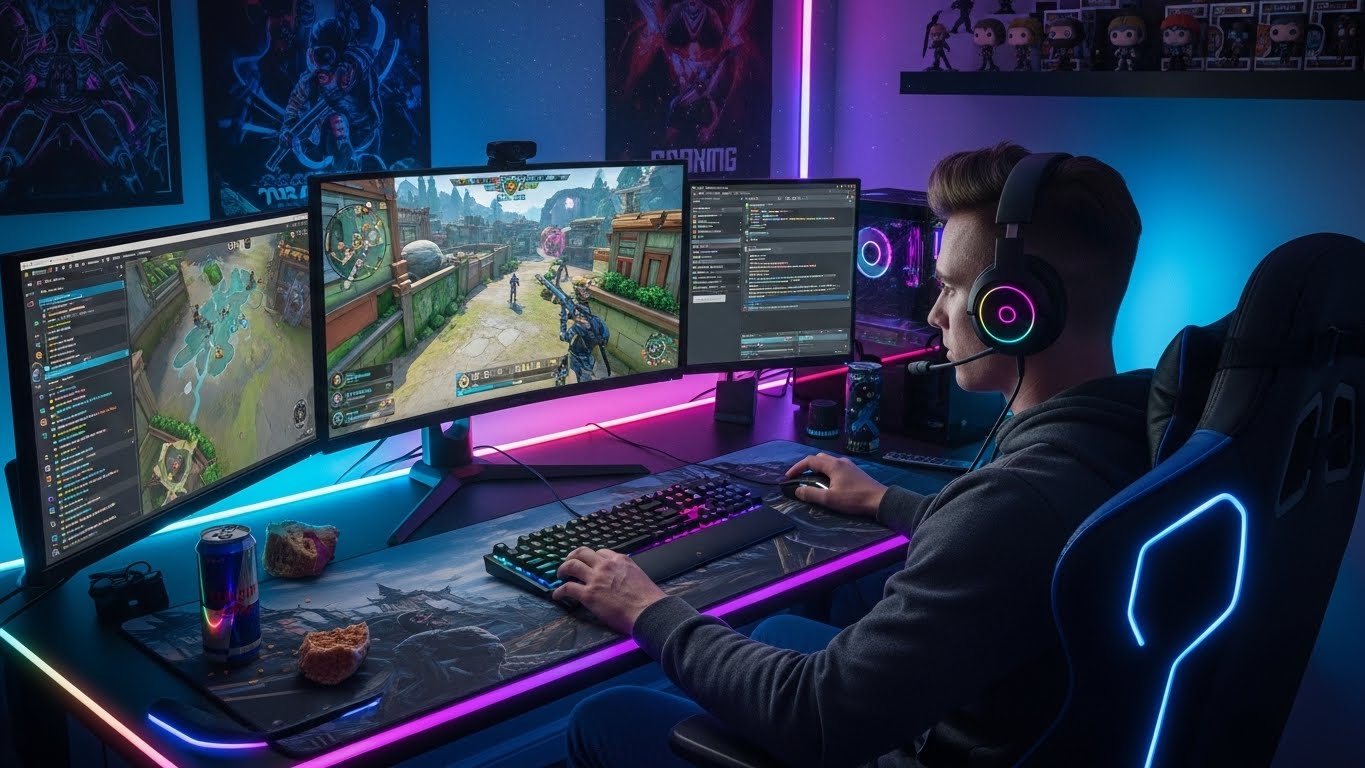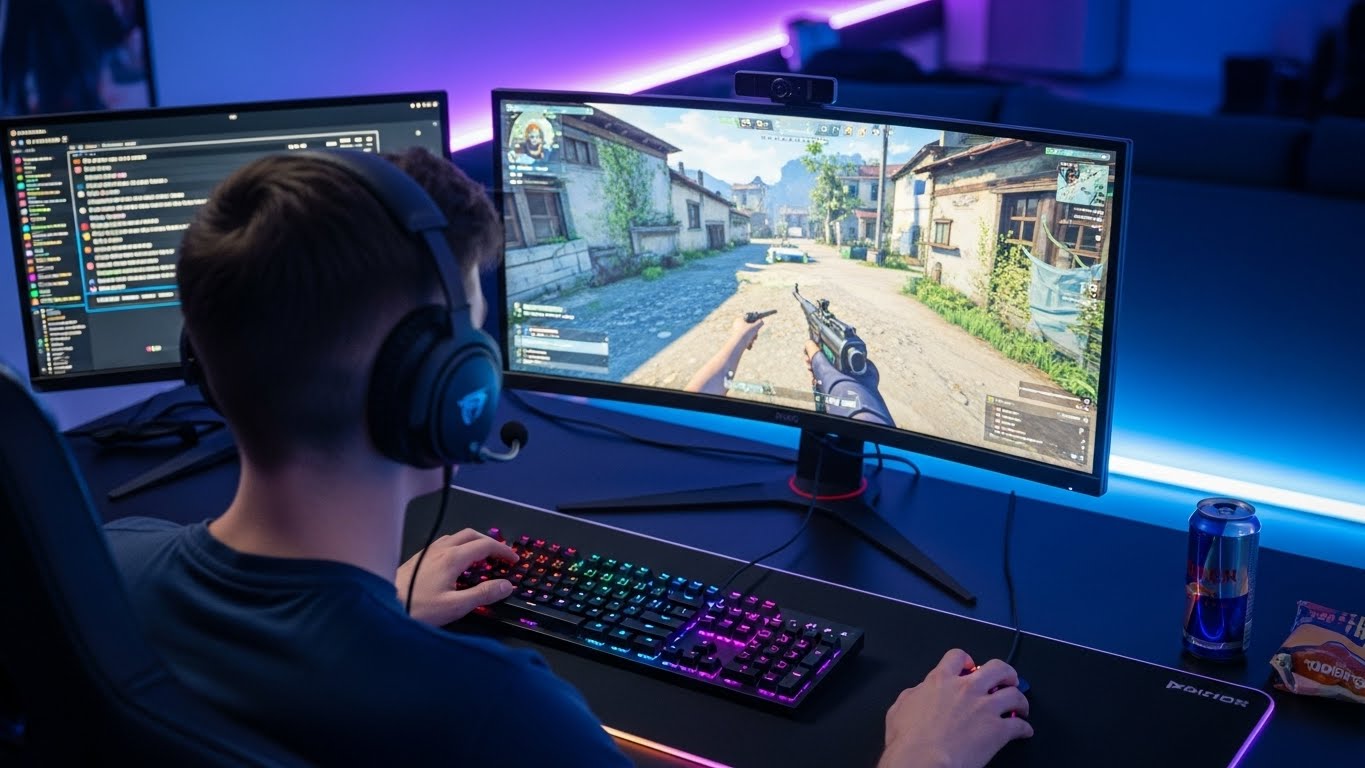

Video gaming is more than just a hobby—it’s a global phenomenon that has touched millions of lives. Over the past few decades, the gaming industry has grown exponentially, evolving from simple, pixelated graphics and limited gameplay to massive, open-world adventures with breathtaking visuals and complex storylines. With the rise of esports, online gaming, and cutting-edge technologies like virtual reality, the future of gaming promises to be even more exciting.
In this blog post, we’ll dive deep into the history of gaming, the technological advances that have driven its success, the impact it’s had on society, and where the industry is headed in the years to come.
The Beginnings of Video Gaming: Simple and Fun
To truly understand the growth and significance of video gaming today, we have to look back to the earliest days of the industry. Video gaming as we know it began in the early 1950s and 1960s, with experiments in computing and simulations. However, it was in the 1970s that video games started to enter mainstream culture, largely thanks to arcade machines.
One of the earliest arcade games was Pong, released by Atari in 1972. A simple ping-pong simulation, Pong was a huge hit, marking the beginning of the arcade era. Players would insert coins into machines to play games, often in public spaces like arcades, bars, and malls. While basic by today’s standards, these early games were a form of entertainment that captured the imagination of the masses.
The early 1980s saw the introduction of even more famous titles like Space Invaders (1978), Pac-Man (1980), and Donkey Kong (1981). These games were relatively simple but had a profound impact on the gaming culture. For the first time, people were regularly coming together to play games, compete for high scores, and enjoy a shared experience.
The Rise of Home Consoles: Bringing Games to the Living Room
As the popularity of arcade games soared, it wasn’t long before the idea of home consoles became appealing. The idea of playing video games at home, without needing to visit an arcade, was revolutionary. In 1977, Atari released the Atari 2600, the first widely successful home gaming console. It allowed people to play games like Space Invaders and Asteroids in their living rooms, helping to bring gaming into homes across the world.
Following the success of the Atari 2600, other companies started to enter the market. In the early 1980s, Mattel introduced the Intellivision console, which boasted better graphics and sound than the Atari 2600. Although it didn’t achieve the same level of success as Atari’s system, it helped to demonstrate the potential for home gaming systems to grow beyond simple arcade ports.
The big shift came in 1985 with the release of the Nintendo Entertainment System (NES). The NES is often credited with saving the video game industry, which had suffered a major crash in 1983 due to market oversaturation. Nintendo’s system brought high-quality games like Super Mario Bros., The Legend of Zelda, and Metroid, games that are still beloved by gamers today. The NES was the start of what many consider the “Golden Age” of gaming, where home consoles became the central hub for gaming experiences.
The 3D Revolution: How Gaming Became Immersive
The 1990s brought massive technological advancements that would change the face of gaming forever. One of the biggest leaps forward was the introduction of 3D graphics. Whereas games before had been constrained by two-dimensional graphics, the new generation of consoles and PCs allowed for the creation of complex, three-dimensional environments.
In 1991, Sonic the Hedgehog became Sega’s iconic mascot, bringing a new sense of speed and excitement to the gaming world. However, it wasn’t until the mid-1990s that 3D graphics truly started to take off. In 1994, Sony launched the PlayStation, a console that was specifically designed to handle 3D games. Titles like Gran Turismo (1997) and Final Fantasy VII (1997) brought complex narratives and 3D environments to the forefront of gaming.
The release of the Nintendo 64 in 1996 also brought 3D gaming to a wider audience. With its classic titles like Super Mario 64 and The Legend of Zelda: Ocarina of Time, the Nintendo 64 proved that 3D games could be as fun and compelling as their 2D predecessors.
The shift to 3D gaming helped push the limits of what was possible in terms of gameplay. It also gave rise to new genres like first-person shooters (FPS) and survival horror games. Titles like Doom (1993), Quake (1996), and Resident Evil (1996) were some of the first games to embrace 3D environments, providing players with entirely new gaming experiences.
The Growth of Online Gaming: Connecting Players Worldwide
As gaming technology continued to advance, the next major leap forward came in the form of online gaming. The internet opened up new possibilities for gaming, allowing people to play together in real time regardless of their physical location.
In the late 1990s and early 2000s, games like StarCraft (1998) and Quake III Arena (1999) brought online multiplayer gaming into the mainstream. Players could now compete with or against each other in real-time, and the ability to play with friends or strangers across the globe created a sense of community that was previously unheard of.
The launch of services like Xbox Live in 2002 and PlayStation Network in 2006 allowed players to connect seamlessly to the internet, further pushing the boundaries of online gaming. The release of Halo 2 (2004) for the Xbox helped solidify the importance of online multiplayer in modern gaming, setting the stage for the competitive esports scene that would emerge in the years to come.
With the rise of online gaming, new genres like massively multiplayer online role-playing games (MMORPGs) gained popularity. World of Warcraft (2004) became a cultural phenomenon, bringing millions of players together in a persistent, online world filled with quests, adventures, and social interaction.
Mobile Gaming: Revolutionizing Access and Accessibility
The 2000s and 2010s saw the rise of mobile gaming, which transformed the gaming landscape in ways that previous generations of consoles never could. The advent of smartphones and tablets brought gaming to the masses, allowing people to play anywhere at any time.
Mobile games like Angry Birds (2009) and Candy Crush Saga (2012) introduced millions of new players to gaming. These games were accessible, easy to play in short bursts, and free to download, making them highly addictive and appealing to a wide audience. In many ways, mobile gaming democratized gaming, breaking down barriers related to hardware, time, and location.
Additionally, the rise of mobile gaming led to the development of entirely new genres, such as puzzle games, idle games, and hyper-casual games. These genres were optimized for quick, on-the-go play, and often relied on microtransactions and in-app purchases to generate revenue.
While mobile gaming is often seen as a more casual form of gaming, it has also introduced some highly complex titles, such as Clash Royale (2016) and PUBG Mobile (2018), which feature competitive, multiplayer elements similar to traditional console and PC games.
Virtual Reality and the Future of Gaming
Looking ahead, one of the most exciting innovations in gaming is the rise of virtual reality (VR). VR technology has the potential to completely change the way players interact with games. Instead of staring at a screen, players wearing VR headsets can immerse themselves in fully 3D virtual environments.
Companies like Oculus (now owned by Meta), HTC, and Sony have all developed VR platforms that offer unique and immersive experiences. Games like Half-Life: Alyx (2020) and Beat Saber (2018) have helped showcase the potential of VR in gaming, with highly interactive environments and motion-based controls that allow players to feel as though they are truly inside the game world.
Virtual reality gaming allows for deeper immersion and more natural gameplay mechanics. For instance, instead of simply controlling a character with a controller, players can physically move and interact with the game world, which adds a layer of realism and excitement. As VR technology continues to improve, we can expect even more impressive games and experiences that fully transport players into fantastical worlds.
In addition to VR, augmented reality (AR) is gaining traction in the gaming world. AR overlays digital elements on the real world, allowing players to interact with virtual objects within their physical environment. Games like Pokémon GO (2016) demonstrated the power of AR, as players could catch virtual Pokémon in real-world locations using their smartphones. As AR technology becomes more advanced, it’s likely that more games will incorporate AR elements, blending the virtual and physical worlds in new and innovative ways.
The Social and Cultural Impact of Gaming
Gaming has grown to become a major cultural force, influencing everything from entertainment to social interaction. The rise of platforms like Twitch, YouTube, and Discord has made it easier than ever for gamers to connect with each other, share experiences, and build communities.
Esports, or competitive gaming, has exploded in popularity, with professional leagues, tournaments, and sponsorships making it a legitimate career for many players. Major tournaments like The International (Dota 2) and League of Legends World Championship draw millions of viewers each year, with prize pools in the millions of dollars. Esports is no longer just a niche activity; it’s a global industry that continues to grow.
Moreover, gaming has become a tool for social connection. Multiplayer games allow friends and strangers alike to team up and cooperate, forging friendships and collaborations that transcend geographical boundaries. In many ways, gaming has become an integral part of modern social life.
The Dark Side of Gaming: Addiction and Mental Health
As with any form of entertainment, gaming also has its downsides. Video game addiction is a growing concern, particularly among young people. Studies have shown that excessive gaming can lead to issues like sleep deprivation, social isolation, and mental health problems such as anxiety and depression. While gaming itself isn’t inherently harmful, it’s important to strike a healthy balance between gaming and other aspects of life.
The rise of mobile and online games with microtransactions has also led to concerns about gambling-like behavior, with some games encouraging players to spend large sums of money on in-game purchases. This phenomenon, known as “loot boxes,” has been the subject of much debate, particularly in terms of its impact on younger players.
Despite these concerns, the gaming community is taking steps to address these issues. Many game developers now incorporate time limits, parental controls, and warnings about excessive play. Additionally, organizations and advocacy groups are working to promote responsible gaming habits, ensuring that players can enjoy gaming without it negatively impacting their mental health or daily lives.
Conclusion: Gaming’s Bright Future
Gaming has come a long way since the days of simple, pixelated arcade machines. Today, it’s an industry worth billions of dollars, with technological advancements that continually push the boundaries of what’s possible. From mobile games to virtual reality, the future of gaming is filled with limitless potential.
Whether you’re a casual player or a dedicated esports enthusiast, one thing is certain: gaming will continue to evolve, creating new experiences, communities, and opportunities for entertainment and connection. As technology continues to advance and new gaming experiences emerge, the world of gaming will remain at the forefront of digital entertainment, offering a diverse and inclusive space for players worldwide.