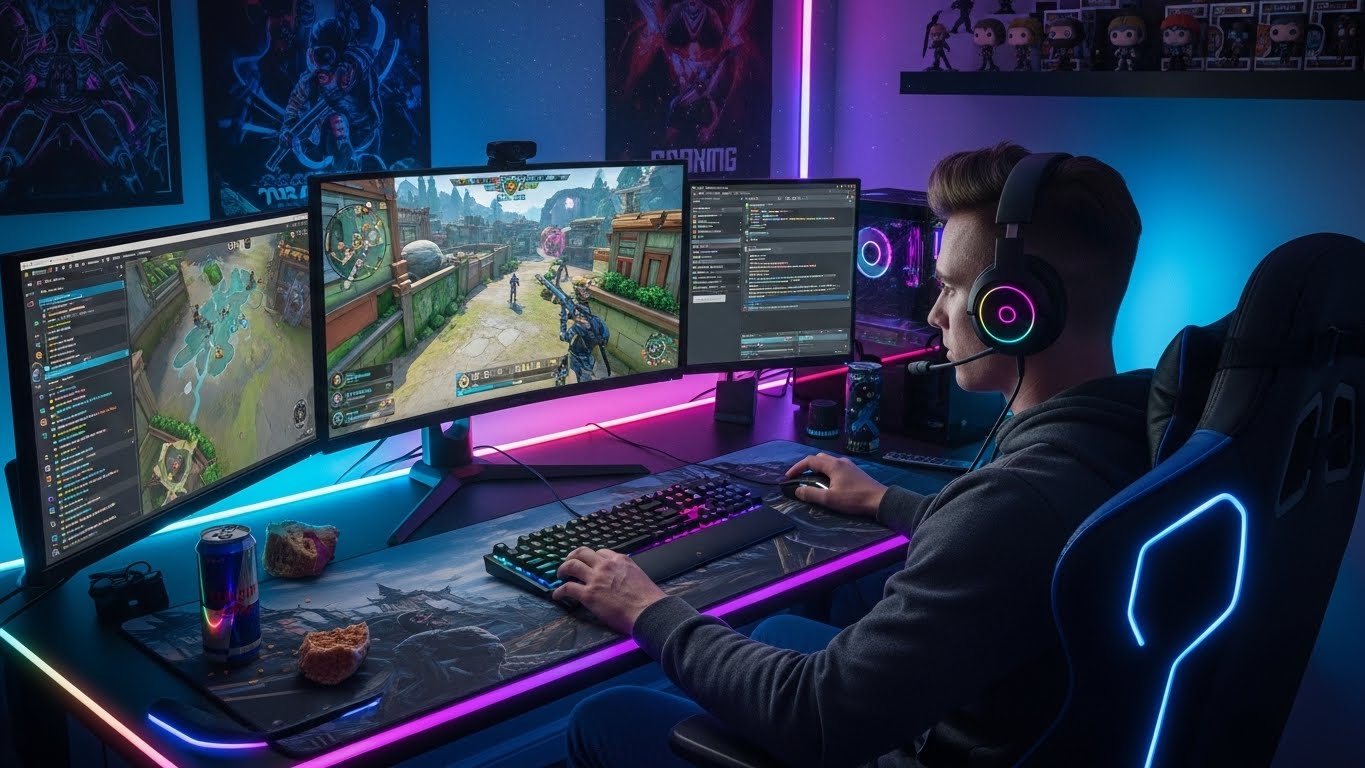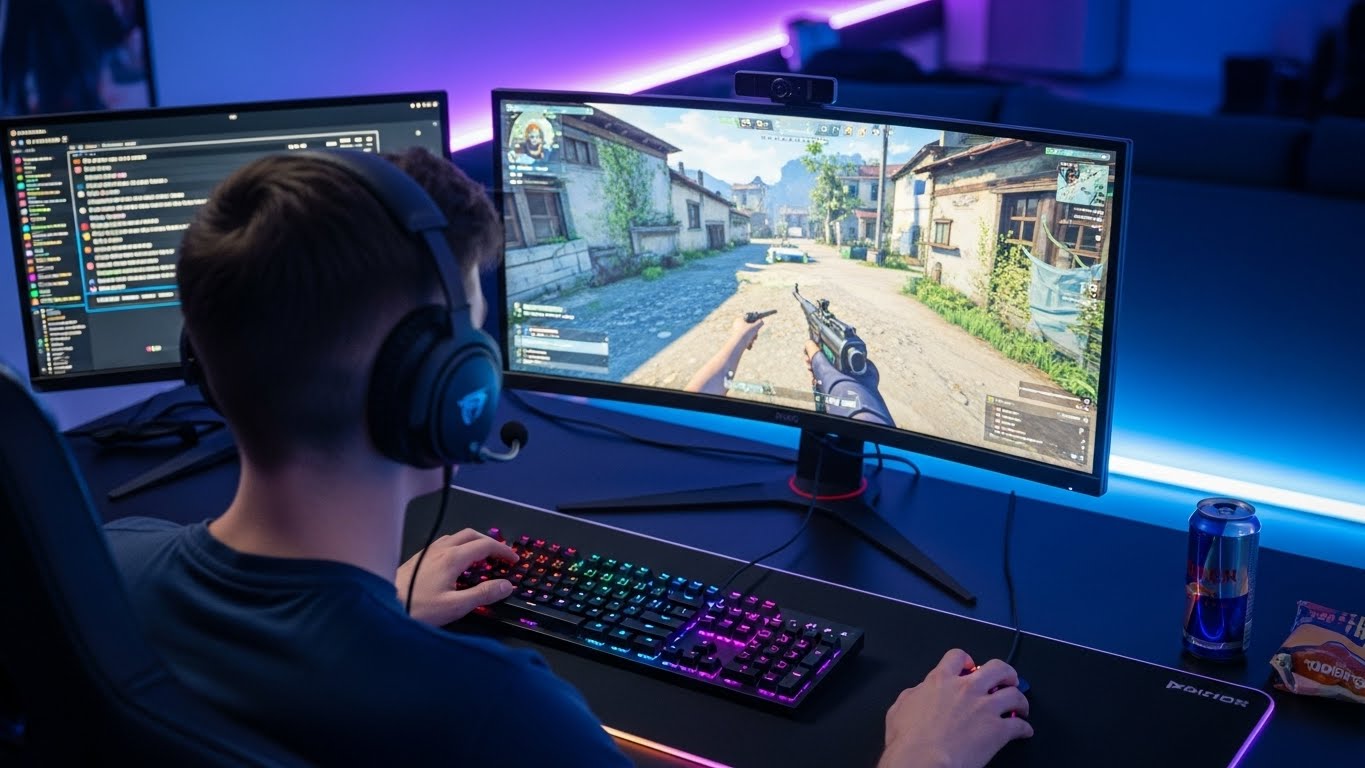
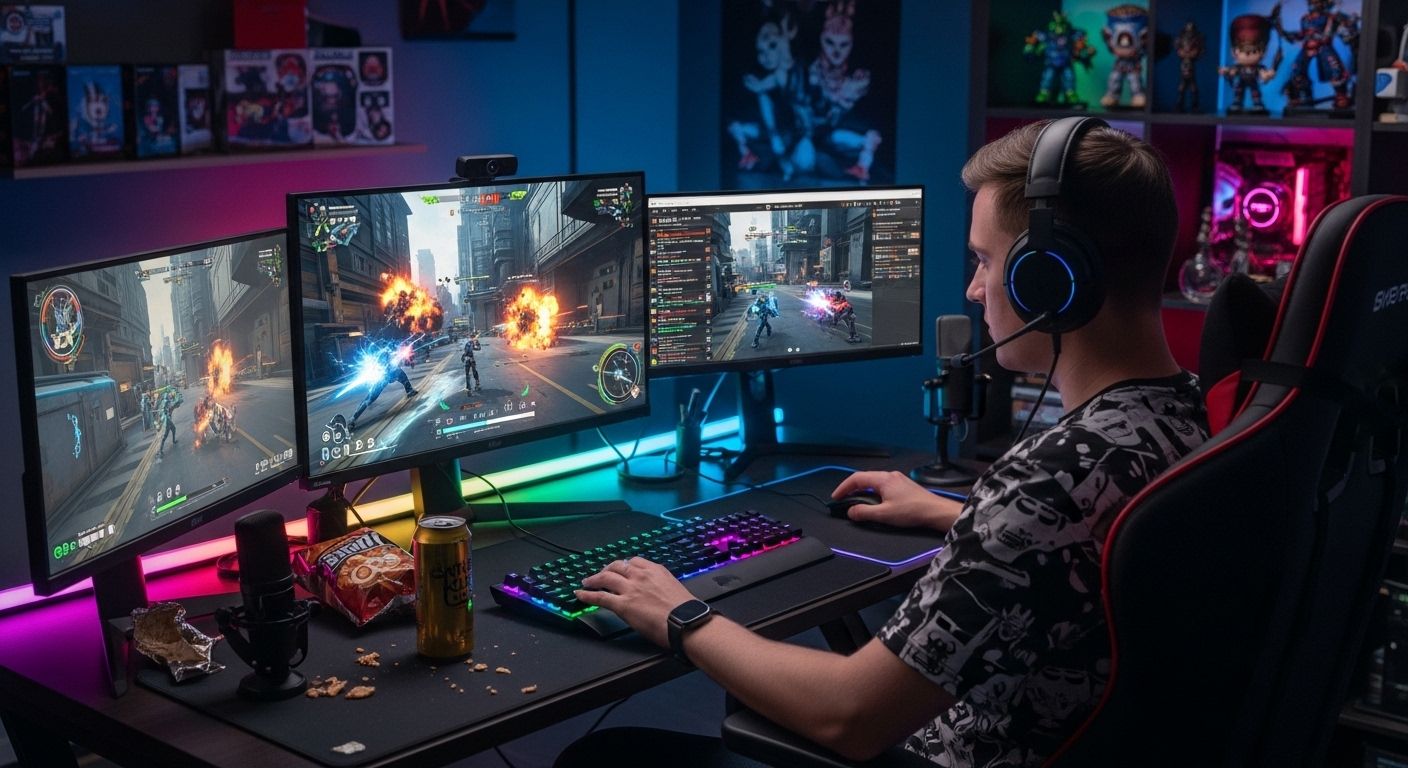
In recent decades, gaming has transitioned from a niche hobby into a global cultural phenomenon. It has evolved beyond simple entertainment, becoming an immersive experience, a competitive sport, and a social space for millions of people. What once started with basic pixelated graphics and simplistic gameplay has now blossomed into a world where entire universes exist at the fingertips of players. In this blog post, we’ll dive into the multi-dimensional world of gaming, exploring its origins, its growth, and the diverse impact it has had on society.
The Origins of Gaming: A Simple Beginning
Gaming’s journey can be traced back to the early 1950s and 1960s when the concept of video games was still in its infancy. The very first games were largely experimental and served as learning tools for computer scientists. One of the earliest known video games was OXO, a computer version of tic-tac-toe, developed in 1952. However, it wasn’t until the 1970s that the gaming world began to take shape with arcade machines like Pong in 1972. Pong was simple: two paddles and a bouncing ball, but it captured the imagination of players everywhere, marking the beginning of what would become a multi-billion-dollar industry.
The arcade scene flourished through the late 1970s and 1980s. Iconic games like Space Invaders, Pac-Man, and Donkey Kong became household names. As arcades grew in popularity, they became cultural hubs where people of all ages gathered to compete, socialize, and escape into the digital world.
Home Consoles: Bringing Gaming to the Living Room
The true revolution in gaming came when consoles allowed players to enjoy video games at home. In 1977, the Atari 2600 was released, and with it, the idea of bringing gaming from the arcade to the living room. This era saw the rise of early home video game consoles, although it wasn’t until the mid-1980s that gaming truly exploded in the household.
The Nintendo Entertainment System (NES), launched in 1985, was a game-changer. It brought iconic franchises like Super Mario Bros. and The Legend of Zelda into the homes of millions, cementing Nintendo’s place in gaming history. The NES marked the beginning of a golden age of home gaming, where players could immerse themselves in stories, explore expansive worlds, and develop new skills from the comfort of their own homes.
The Golden Age of 3D Graphics
By the 1990s, video games were rapidly advancing in both technology and design. One of the most significant milestones in gaming history was the introduction of 3D graphics. This era saw the transition from simple 2D pixelated sprites to fully realized three-dimensional worlds. With the advent of consoles like Sony’s PlayStation and Nintendo 64, players were able to experience gaming in a completely new way.
Games like Super Mario 64, Final Fantasy VII, and The Legend of Zelda: Ocarina of Time showcased the power of 3D technology, allowing players to explore vast, open worlds and engage in rich, complex storylines. The era of 3D graphics pushed the limits of gaming technology and paved the way for the immersive, cinematic experiences we enjoy today.
Online Gaming: A New Era of Connection
As the internet became more accessible in the late 1990s and early 2000s, the gaming world experienced another massive shift. Online multiplayer games began to take center stage, allowing players to connect with others around the world. The rise of broadband internet and Wi-Fi made it easier than ever for gamers to participate in large-scale, real-time multiplayer experiences.
Games like World of Warcraft, Halo 2, and Counter-Strike allowed players to form communities, compete against each other, and even collaborate in team-based missions. These games made it possible for players to escape the confines of their own homes and enter vast, digital worlds where they could forge friendships, rivalries, and alliances that transcended physical borders.
Online gaming also introduced the concept of streaming and social media in the gaming world. Platforms like Twitch, YouTube, and Discord allowed gamers to share their experiences with an even wider audience, creating a new era of content creators, streamers, and esports athletes.
Mobile Gaming: The World in Your Pocket
In the 2010s, the rapid rise of smartphones and tablets brought gaming to a new audience. Mobile gaming, once seen as a casual pursuit, quickly became a massive sector in the industry. With millions of people now carrying powerful devices in their pockets, games like Angry Birds, Candy Crush Saga, and Clash of Clans reached audiences beyond traditional gamers.
Mobile gaming’s greatest strength lies in its accessibility and convenience. A game can be played in short bursts, making it an ideal choice for people with busy schedules. Moreover, the free-to-play model, which often incorporates in-app purchases, has made gaming accessible to a wider demographic, breaking down barriers to entry and making it easier for people to try new games without a significant upfront investment.
The Rise of Esports and Streaming
As gaming continues to grow, so does its competitive nature. Esports, or competitive video gaming, has seen a meteoric rise in popularity, with professional players now competing for millions of dollars in prize money. Games like League of Legends, Dota 2, and Fortnite have attracted massive audiences both online and at live events. Esports tournaments are broadcast globally, drawing in millions of viewers, and esports athletes have become celebrities in their own right.
At the same time, streaming platforms like Twitch and YouTube Gaming have allowed gamers to turn their passion into full-time careers. Streamers and content creators now have the ability to connect with their fans, showcase their skills, and entertain audiences around the world. Gaming has gone from a solitary hobby to a global spectacle, with millions watching competitive gaming events and streaming sessions in real time.
The Future of Gaming: Virtual Reality and Beyond
Looking ahead, the future of gaming promises even greater innovations. Virtual reality (VR) and augmented reality (AR) are two emerging technologies that are poised to reshape how we experience games. With VR headsets like the Oculus Rift and PlayStation VR, players can step into fully immersive worlds, interacting with their surroundings in ways that were once the stuff of science fiction.
AR, on the other hand, has the potential to blend the digital and physical worlds. Games like Pokémon GO showed how augmented reality could turn the real world into a gaming playground, allowing players to interact with digital creatures and elements in real-world locations.
As technology continues to evolve, gaming will likely continue to push the boundaries of what is possible. The integration of artificial intelligence (AI) and machine learning could lead to even more dynamic and responsive gaming experiences, while advancements in cloud gaming could make it possible for players to enjoy high-quality games on any device, anywhere in the world.
Conclusion: Gaming as a Cultural Phenomenon
Gaming has evolved far beyond its humble beginnings. What started as simple entertainment has become an integral part of modern culture, affecting everything from how we socialize to how we view art, storytelling, and competition. Whether it’s through a solo adventure, a multiplayer battle, or an esports tournament, gaming continues to provide players with unforgettable experiences and foster connections that span the globe.
As we look to the future, it’s clear that gaming will remain at the forefront of digital innovation, continuing to shape and define our entertainment landscape for years to come.