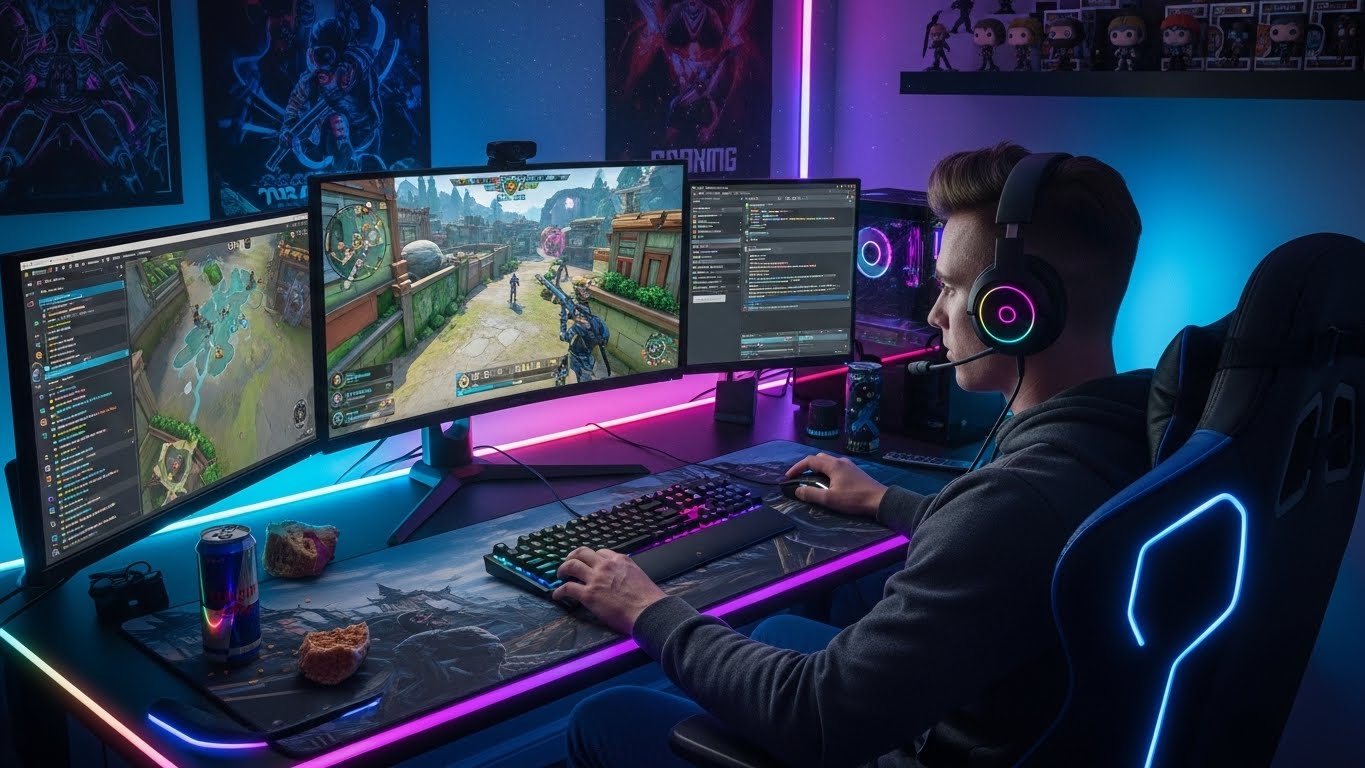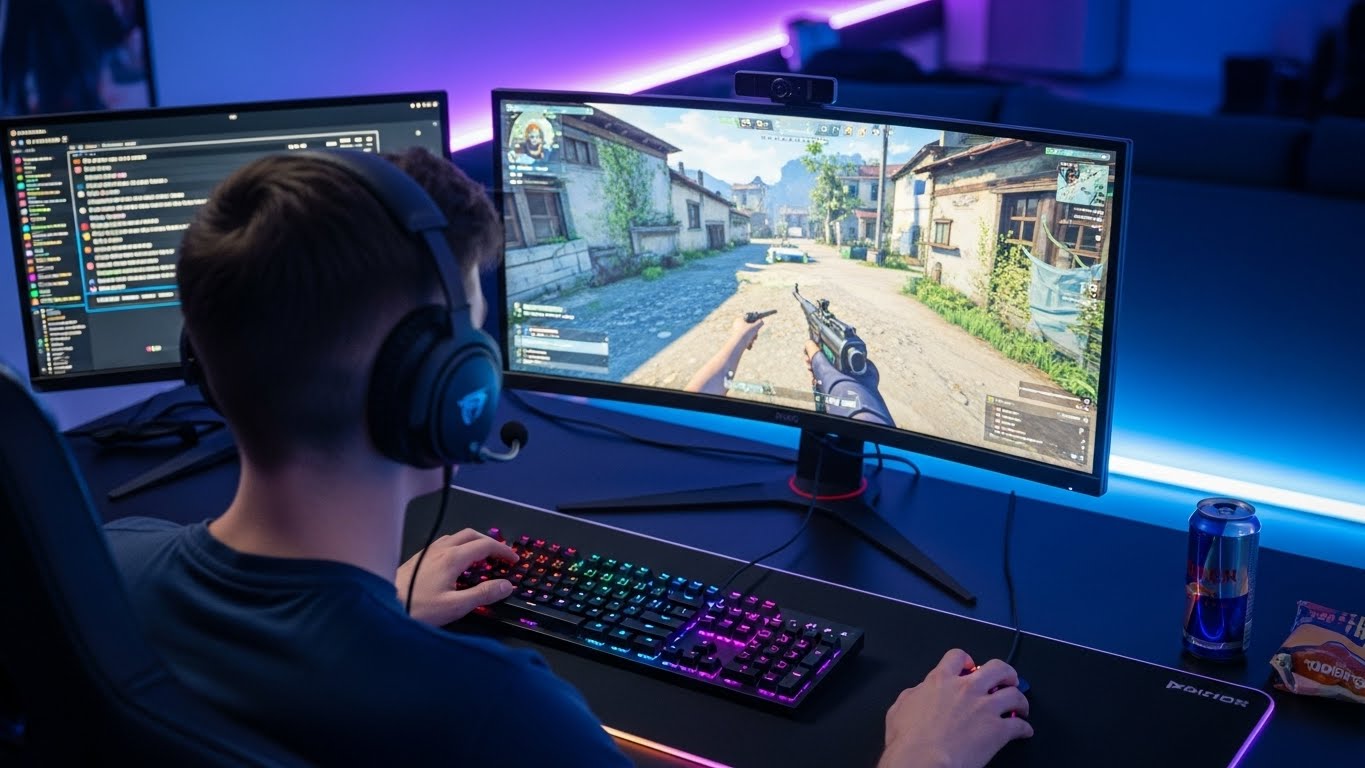

In the past few decades, gaming has evolved from a niche hobby to a global entertainment powerhouse. What once began as simple pixelated games on clunky arcade machines has transformed into expansive virtual universes, immersive storytelling, and multi-billion dollar industries. This journey of gaming is not just about the technology or the games themselves, but also about the culture that has formed around it. In this blog post, we’ll explore the evolution of gaming, its impact on society, and the future possibilities that lie ahead.
The Humble Beginnings: 1970s to 1980s
The history of gaming dates back to the early 1970s, a time when video games were a novelty in the world of entertainment. One of the first video games that gained attention was Pong (1972), developed by Atari. It was a simple tennis-like game where players controlled paddles to bounce a ball back and forth. Although the concept was basic, it sparked the imagination of many and laid the foundation for future innovations.
In the late 1970s and 1980s, arcade gaming became a dominant form of entertainment. Classic titles like Space Invaders (1978), Pac-Man (1980), and Donkey Kong (1981) revolutionized the gaming industry. These games were simple yet addictive, offering players a new way to engage with digital content. The arcade environment was also the birthplace of competitive gaming, where players would gather to try and top the high score charts.
The early consoles like the Atari 2600 and Nintendo Entertainment System (NES) paved the way for home gaming. With the introduction of these consoles, games could be played in the comfort of one’s living room, making gaming more accessible than ever before. The graphics were primitive by today’s standards, but the gameplay was revolutionary. Titles like Super Mario Bros. (1985) and The Legend of Zelda (1986) provided players with a sense of adventure and exploration that was previously unseen in gaming.
The Rise of 3D Graphics and the 1990s Revolution
The 1990s were a transformative decade for gaming. The most significant change during this period was the introduction of 3D graphics, which created a more immersive experience for players. Super Mario 64 (1996) on the Nintendo 64 was a groundbreaking title that showcased the potential of 3D environments. This game not only introduced players to a vast, three-dimensional world but also set a new standard for how platformers could evolve.
The 1990s also marked the arrival of new gaming consoles that further pushed the boundaries of technology. Sony’s PlayStation (1994) introduced a more powerful gaming system with better graphics and gameplay. Sega’s Dreamcast (1999), though short-lived, was ahead of its time, offering online connectivity and stunning visuals that set it apart from its competitors. The rivalry between Sony and Sega (and later Microsoft with the Xbox) became the defining aspect of the gaming industry, with each company striving to outdo the other in terms of hardware capabilities and game libraries.
It was also during this time that first-person shooters (FPS) began to rise in popularity. Games like Doom (1993) and Quake (1996) revolutionized the genre, setting the stage for future classics like Half-Life (1998) and Counter-Strike (1999). These games introduced the concept of online multiplayer, allowing players from around the world to compete against each other in virtual arenas.
Online Gaming and the Rise of MMOs: 2000s
The early 2000s marked the era of online gaming and the explosion of Massively Multiplayer Online (MMO) games. These games allowed thousands of players to interact in the same virtual world, creating social experiences on a scale never before seen in the gaming industry. The most notable example of this era was World of Warcraft (2004), a game that became a cultural phenomenon, drawing millions of players into its expansive fantasy world.
The success of MMOs also paved the way for other online multiplayer games, including First-Person Shooters like Call of Duty and Halo, which offered players the opportunity to engage in competitive play with others from around the world. The rise of online gaming platforms such as Xbox Live and PlayStation Network also enabled seamless online matchmaking, creating a more accessible and social gaming experience.
The 2000s also saw the growth of casual gaming, with the introduction of games like FarmVille (2009) and Angry Birds (2009), which appealed to a broader demographic than traditional gamers. These games were easy to pick up, didn’t require expensive hardware, and were often available for free or at a low cost. The accessibility of these games led to a massive surge in mobile gaming, and smartphones soon became one of the most popular platforms for gaming.
The Impact of Gaming on Society: Cultural Shift
Gaming has long been associated with a certain subculture, but as the industry grew, it started to be recognized as a legitimate form of entertainment on par with movies and television. The advent of esports, where professional gamers compete in large-scale tournaments, has also helped elevate gaming to a mainstream activity. Games like League of Legends and Dota 2 have become spectator sports, attracting millions of viewers globally.
Beyond entertainment, gaming has also had an impact on social dynamics. Online multiplayer games have brought together people from different cultures and backgrounds, fostering friendships and communities. In fact, many people now spend more time socializing in virtual worlds than in real life. Platforms like Twitch and YouTube Gaming have created new opportunities for gamers to share their experiences with a global audience, turning many gamers into influencers with massive followings.
Moreover, gaming has become an important educational tool. Games like Minecraft have been used in schools to teach subjects like mathematics, history, and problem-solving. Similarly, games such as SimCity have provided players with an opportunity to explore city planning and management in a simulated environment. Game-based learning is now being integrated into educational curriculums worldwide, highlighting gaming’s potential to teach and inspire.
The Modern Gaming Experience: Virtual Reality, Cloud Gaming, and More
In recent years, the gaming industry has continued to push the boundaries of innovation. Virtual Reality (VR) and Augmented Reality (AR) have taken gaming to new heights by immersing players in 360-degree digital environments. Games like Beat Saber (2018) and Half-Life: Alyx (2020) have demonstrated the potential of VR gaming, offering players a level of interactivity and immersion that was previously unimaginable.
Cloud gaming has also emerged as a game-changer, enabling players to stream games directly to their devices without the need for powerful hardware. Services like Google Stadia and Microsoft’s Xbox Cloud Gaming are paving the way for a future where anyone with an internet connection can access a vast library of games, regardless of their device’s specifications. This shift could democratize gaming and allow more people around the world to experience high-quality games without the need for expensive consoles or gaming PCs.
Moreover, the rise of indie games has introduced a new wave of creativity and innovation to the gaming world. Independent developers have created titles like Hollow Knight (2017) and Celeste (2018), which have gained critical acclaim for their unique gameplay and storytelling. The success of these indie games has proven that innovation and artistic expression are just as important as cutting-edge technology in the gaming world.
The Future of Gaming: What’s Next?
Looking to the future, the gaming industry shows no signs of slowing down. With the continued development of technologies like artificial intelligence (AI) and machine learning, games will become more responsive, adaptive, and intelligent. AI-powered NPCs (non-playable characters) could evolve to become more lifelike, with their own personalities, motivations, and behaviors, further enhancing the immersion of games.
The continued growth of cross-platform gaming will allow players to connect and compete across different devices, creating a more unified and accessible gaming experience. The integration of 5G technology will also improve online gaming by reducing latency and enabling faster data transfer speeds, making multiplayer games smoother and more responsive.
Moreover, the potential for interactive storytelling will continue to evolve, allowing players to shape the narrative in ways that were previously impossible. As the lines between gaming and other forms of media blur, we may see the rise of gaming as a service, where ongoing updates and expansions create ever-evolving worlds for players to explore.
Conclusion
Gaming has come a long way since the days of Pong and Space Invaders. Today, it’s a thriving, global industry that has influenced technology, culture, and society in profound ways. Whether you’re a casual mobile gamer or a competitive esports player, the world of gaming offers something for everyone. As technology continues to evolve, the future of gaming is bound to be even more exciting and innovative. The journey of gaming is far from over, and we can only imagine what new experiences await in the digital worlds of tomorrow.